
My mother, (age 66), my self (42,) and my daughter (18) all went snorkeling together we had an awesome time. The guides were funny and had a lot of information. They...
In September 13, 2024Seahorses have always sparked fascination. With their delicate bodies and upright posture, they look like creatures straight out of a marine fairytale. They are small, shy, slow… and yet they belong to one of the most extraordinary groups in the animal kingdom. Not only are they masters of camouflage and unusual swimmers, but they also possess one of the most remarkable characteristics of the natural world: the males are the ones who become pregnant.
But beyond their unique biology, seahorses have a surprisingly wide distribution. They inhabit everything from crystal-clear tropical waters to temperate and colder regions, as long as there is marine vegetation where they can anchor themselves with their prehensile tails.
This blog will take you on a global journey through the habitats of these creatures, exploring how they live, what makes them so special, and in which corners of the planet you can find them.
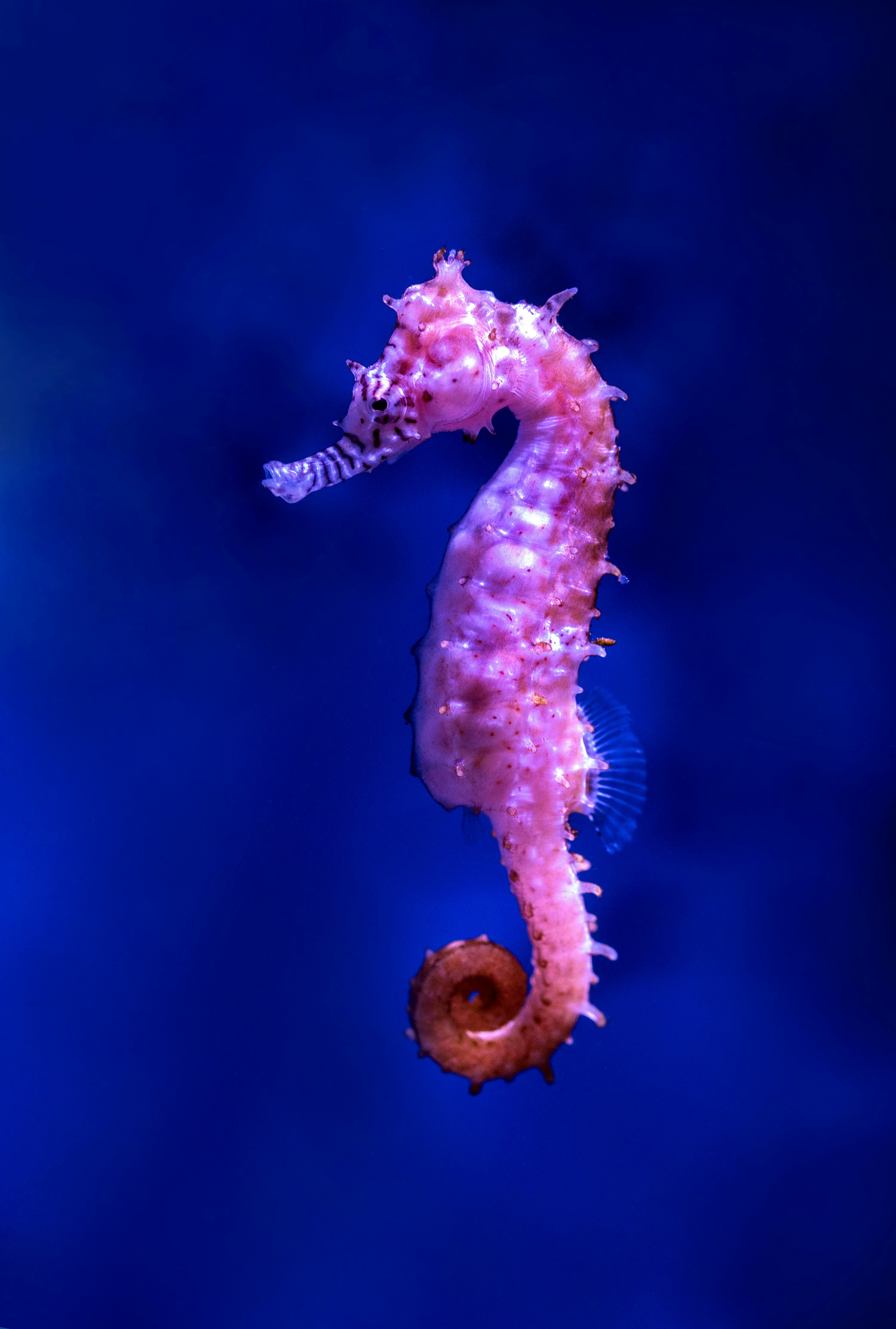
Seahorses belong to the genus Hippocampus, within the family Syngnathidae, which also includes pipefish and leafy sea dragons. Today, more than 45 species are recognized, although new ones are frequently discovered or redefined thanks to genetic studies.
Their bodies, covered with bony plates instead of scales, function like flexible armor. Their elongated, horse-shaped head gives them their name, and their spiral tail acts as an anchor to hold onto corals, seagrass, or algae.
Unlike most fish, seahorses:
Because of their small size (some species measure barely 2 cm), they often go unnoticed even by experienced divers.

Seahorses inhabit every ocean except the Arctic and Antarctic, but they have very specific preferences:
they need relatively calm waters, abundant marine vegetation, and areas where they can hide from predators.
Below are the key regions where these creatures live.
If there were a “global capital” for seahorses, it would be Southeast Asia. Places like the Philippines, Indonesia, Malaysia, and Papua New Guinea host an impressive number of species.
Why is this region so rich in seahorses?
Notable species:
For divers and underwater photographers, this region is an absolute paradise.
The Pacific hosts a remarkable variety of seahorse species, with Australia serving as one of their major natural refuges.
Australia and Its Seas
Australia has some of the most important marine ecosystems for these animals. Regions like Queensland, New South Wales, and Tasmania are home to iconic species such as:
Australian seagrass beds are essential for their reproduction, feeding, and camouflage.
Japan and Korea
In this region we find species such as:
These seahorses adapt to more temperate waters and, although more elusive, play an important role in the local ecosystem.
The Indian Ocean is a mosaic of mangroves, reefs, seagrass meadows, and coastal lagoons, making it an ideal habitat for many species.
Key regions:
Common species:
In the Americas, seahorses mostly inhabit warm Atlantic regions.
The Caribbean and the Gulf of Mexico
These areas host iconic species such as:
They live among corals, sponges, mangroves, and seagrass.
Brazil
The Brazilian coastline is considered one of the major refuges for seahorses in the Americas.
The two predominant species are:
It may surprise many, but there are seahorses in Europe.
Europe
In the Mediterranean and European Atlantic waters, the following species can be found:
They can be found along the coasts of:
Some have even been recorded in relatively cold waters, such as Ireland and the English Channel.
West Africa
Countries like Senegal, Cape Verde, and Angola host other populations, generally in estuaries and coastal reefs.

Despite their global distribution, seahorses have clear habitat preferences:
Their favorite habitat.
Species like H. kuda, H. comes, and H. reidi depend heavily on seagrass.
Submerged trees and twisted roots offer perfect hiding places.
Many juveniles develop here before moving to other zones.
Especially pygmy seahorses, which live exclusively on specific gorgonians or corals.
Their level of camouflage is so extreme that they are almost invisible.
Nutrient-rich areas, though sometimes murky.
Common in:
Some species tolerate cold waters, such as H. abdominalis in Australia and New Zealand.

Beyond their unique appearance, they exhibit extraordinary behaviors:
After a courtship dance, the female deposits her eggs into the male’s brood pouch.
He:
It is one of the most extraordinary reproductive processes in the animal kingdom.
They can change color to resemble:
Some species are nearly indistinguishable from their surroundings.
Certain species form pairs that last multiple seasons, although recent studies show that not all are strictly monogamous.
Instead of a tail fin, they have a prehensile tail that helps them hold on and avoid being swept away by currents.

Seahorses are endangered due to:
Many countries have implemented regulations to protect them, but much more still needs to be done.

If you want to observe them in their natural habitat, these destinations are known for their populations:
They are difficult to spot, but with trained guides, your chances increase.

Seahorses are not only fascinating creatures with a unique biology and almost magical appearance—they are also indicators of ocean health. Where there are seahorses, there are usually rich and balanced ecosystems.
Understanding, protecting, and learning where they live is essential for their survival, especially at a time when oceans face multiple threats.
They are small, yes…
but their impact on marine biodiversity and human imagination is immense.
Join us and discover the magic of these amazing marine creatures!
Facebook: Facebook
Instagram: Cancun Snorkeling (@cancunsnorkeling_) • Fotos y videos de Instagram
TikTok: Cancun Snorkeling (@cancun.snorkeling) | TikTok
My mother, (age 66), my self (42,) and my daughter (18) all went snorkeling together we had an awesome time. The guides were funny and had a lot of information. They...
In September 13, 2024Luis and the other tour guide (can’t remember the name sorry) were very nice and patient with everyone. They kept checking in on everyone to make sure no one got left...
In June 06, 2024Easy to get picked up and a great time snorkeling out in Puerto Morelos! Our guide and coral...
In April 25, 2024Our tour guides - Luis and Jesus - were amazing. They were very kind, patient and great at guiding us through the reefs. They would point out large aquatic life and...
In April 11, 2024We took our family of 9 on a snorkel trip with this company and had the best time! Our guides were super friendly and you could tell they love what they...
In February 29, 2024Our guides were amazing and definitely had a great time. I would recommend this to all my family and friends....
In February 29, 2024An amazing time seeing the reef! The staff were incredibly helpful and quick to point out...
In February 23, 2024The guides were great. Good time, had by all...
In February 22, 2024I have snorkeled at many locations, and this one near Puerto Morelos y undoubtedly one of the bests. Highly recommend...
In December 08, 2023They did an excellent job of taking care of everyone when we went snorkeling....
In December 03, 2023